2026 Trends: Personalization and Branding—Labels and Stickers for Candles from Artisan Brands
 by Avery Team
On the shelf stand finished candles, carefully crafted and thoughtfully designed from start to finish. Each one has its own unique scent and character. But even the most beautiful scent and the purest ingredients can go unnoticed if one thing is missing—a label that catches the eye and tells the product’s story before the customer even touches it. How can you design labels and stickers for handmade candles to stand out in the market and build effective branding in 2026? Let’s find out!
Trends, Branding, 2026 – What Kind of Labeling Will Be Used for Handmade Products in 2026?
Changes in the artisanal candle market are constant—customers expect original ideas, and brands must meet new visual and material standards. Product labels that reflect a brand’s character are becoming the foundation of consistent communication. What kind of label will be best in 2026? To start, it’s worth checking out the upcoming trends.
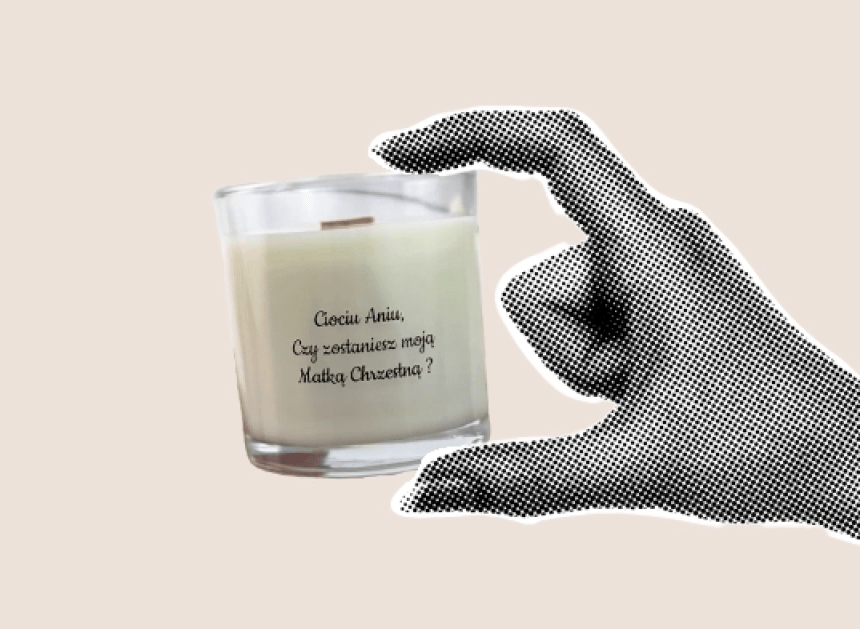
Authenticity and Storytelling in Handmade Labels
In 2026, customers are increasingly choosing brands they can identify with. The label becomes a tool for telling a story—about the origin of the ingredients, the inspiration behind a particular fragrance line, or the values behind the product. This approach strengthens the bond with the customer and sets the brand apart from the competition.
Instead of the message “100% natural,” a mini-story emerges: where the ingredients came from, who produced them, and why the product was created in this particular way. As a result, the label not only informs but also builds an emotional connection with the customer, makes the product stand out on the shelf, and helps the customer remember the brand.
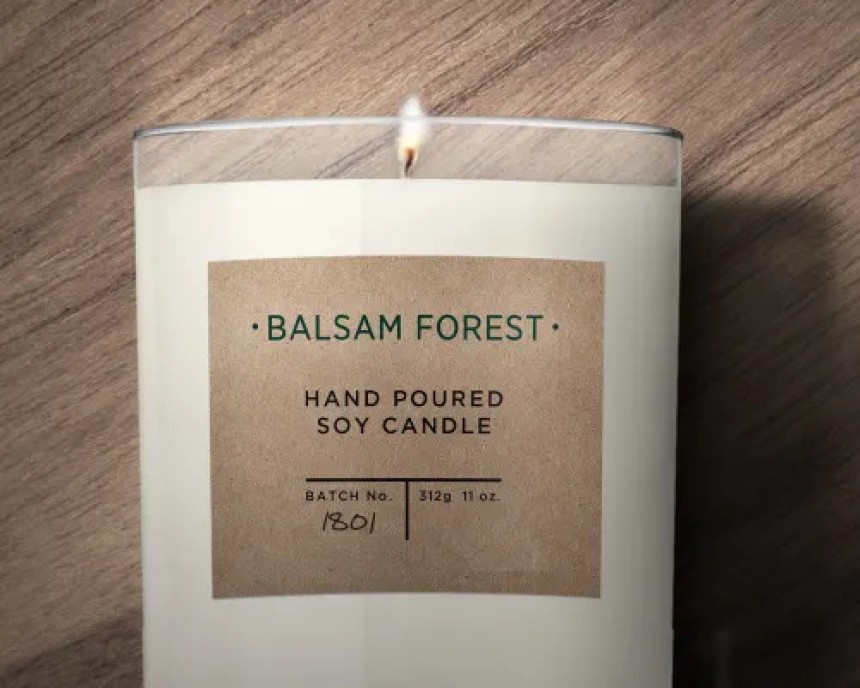
Labels for Handmade Candles
Elegant labels for handmade candles that will highlight the unique character of your products. High-quality craftsmanship and full customization options (your own logo, scent name, and any text). Make your candles captivate at first glance!
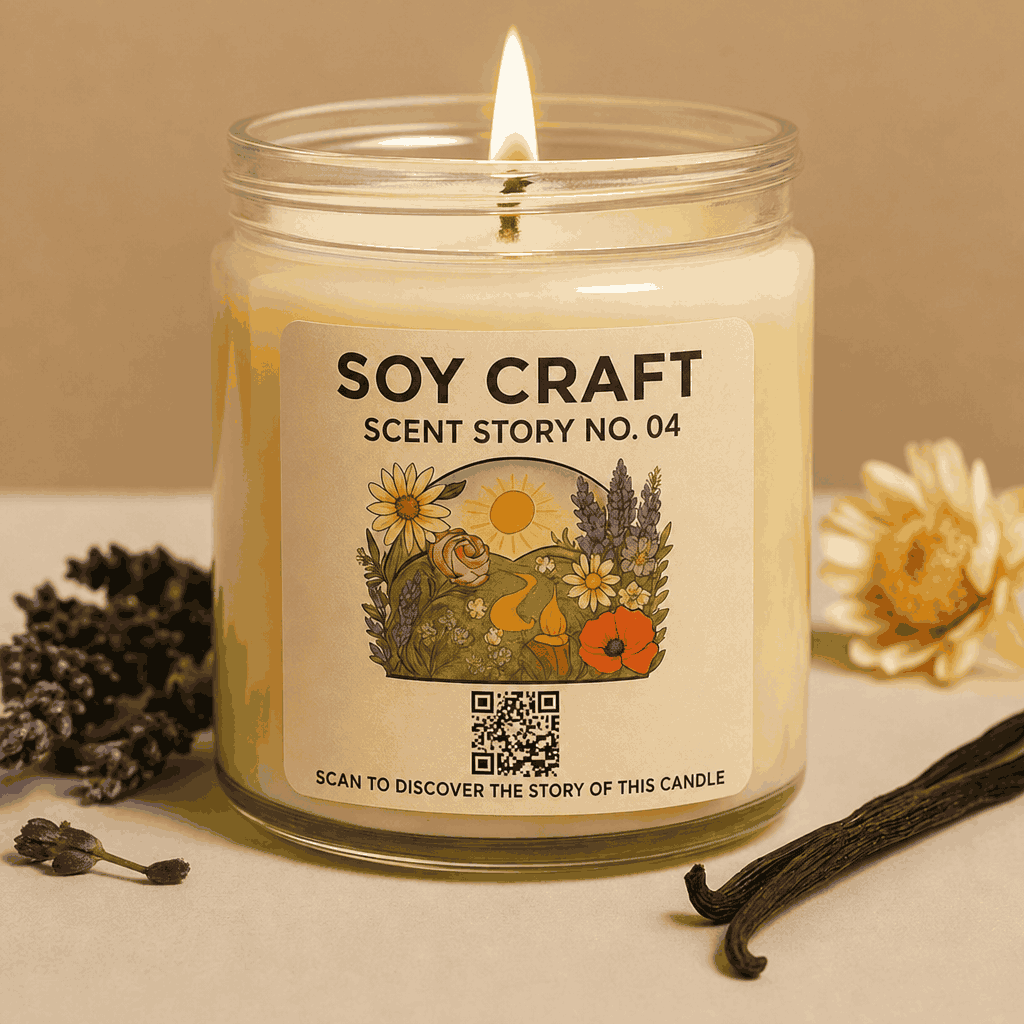
Interactive Labels
Modern labels serve a much broader purpose than simply providing information; they have become an effective tool for building relationships with customers. Thanks to interactive elements such as QR codes or NFC technology, they allow consumers to quickly access the brand’s digital world.
They can be used to share the brand’s extended history, provide detailed instructions on the safe use of candles, or instantly offer promotions and discounts. Interactivity transforms a static label into a dynamic point of contact that increases customer engagement and enriches their experience with the product.
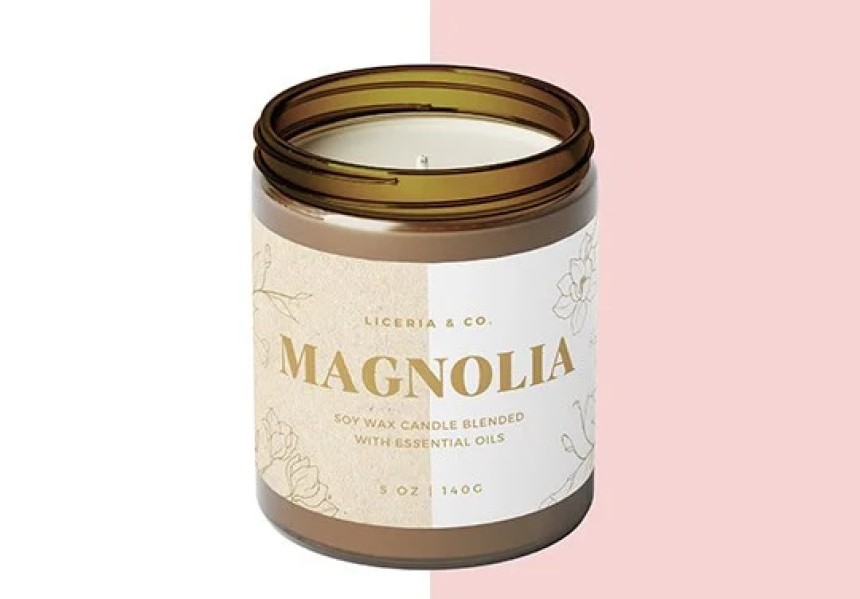
Minimalism and Clarity in Label Design
Minimalist labels are gaining popularity, especially among brands that want to emphasize consistency and professionalism. A limited color palette, simple fonts, and understated graphics give the product a modern and clean look. This style doesn’t distract from the candle itself, while simultaneously reinforcing the impression of high quality and thoughtful branding.
Color and Typography as a Form of Expression
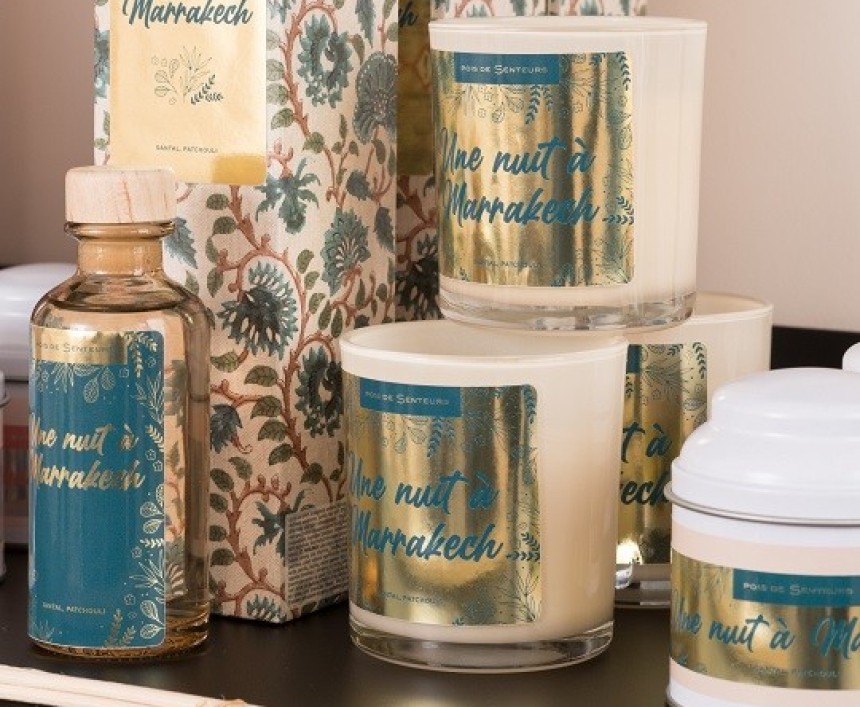
Vibrant colors catch the consumer’s eye, but they must be used with care. In 2026, bold color combinations and unconventional typefaces are emerging—all to help a label stand out from the competition. When used in moderation, these solutions highlight a unique style and reinforce the message.
Nostalgia and Cultural References
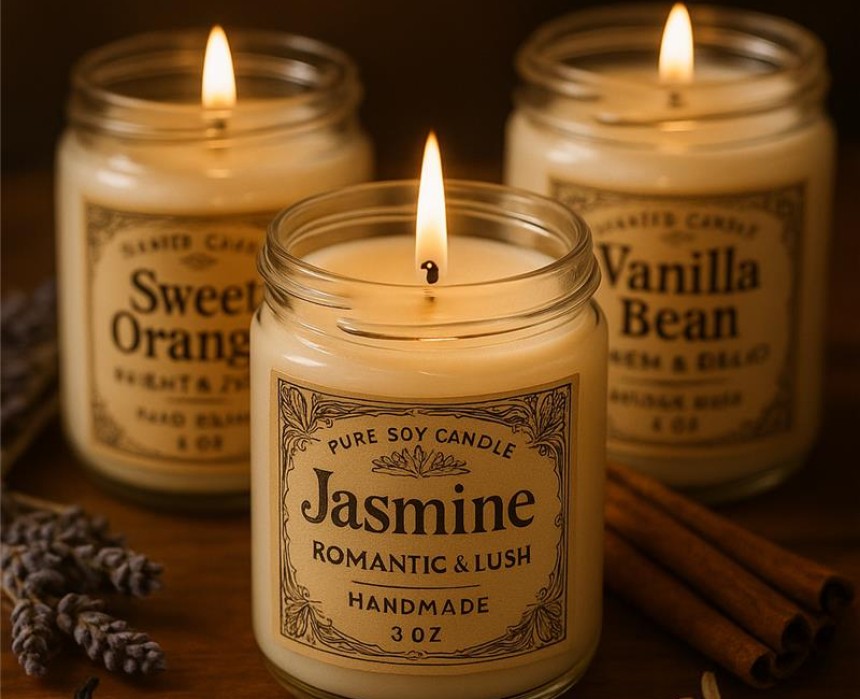
Retro graphics, vintage typefaces, and designs inspired by local crafts are appearing more and more frequently on candle labels. It’s a simple way to grab attention and build an emotional connection with the customer. Such elements immediately evoke associations—with childhood and tradition. They work particularly well in the personalized branding of artisanal products because they emphasize authenticity and allow for the creation of labels with a story behind them, rather than just a name and list of ingredients.
Customizing Candle Labels – How Does a Label Influence Brand Perception?
With handmade products, every element matters—including the label. It’s the first thing that tells the customer which brand they’re dealing with. It’s not just an accessory, but part of the message that can either enhance the product’s value or cause it to go unnoticed.
First impressions. Customers see the label before they even smell the candle. Its appearance must therefore be consistent with the product’s character and evoke the right associations.
Brand identity. Colors, typography, and graphics tell a story that sets a brand apart from others. This ensures that the candles don’t get lost among the competition.
Visual appeal. Aesthetically designed labels add elegance to candles and often become a decorative element in their own right.
Trust and loyalty. Clear information and transparent communication help build a relationship based on reliability—the foundation of long-term customer engagement.
Brand values. The label provides a space to showcase the brand’s commitment to the environment, the quality of its ingredients, and local production.
Why does label customization enhance the value of a handmade brand?
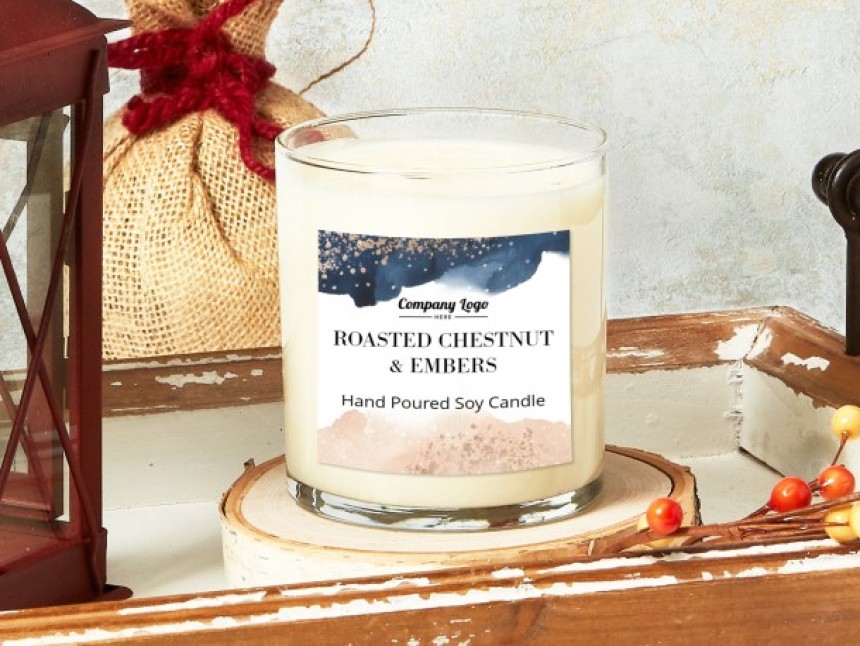
A label designed specifically for a given brand better captures its character, aesthetic, and communication style. In the world of handmade products, consistency and authenticity matter—off-the-shelf designs often fail to deliver this. Customization gives you full control over the design—from the format and material to the color scheme and graphic style. This makes the brand more memorable, and the products themselves are perceived as more refined and valuable.
Trends, Brand Personalization, 2026 – What Colors and Styles Will Dominate Candle Labels in 2026?
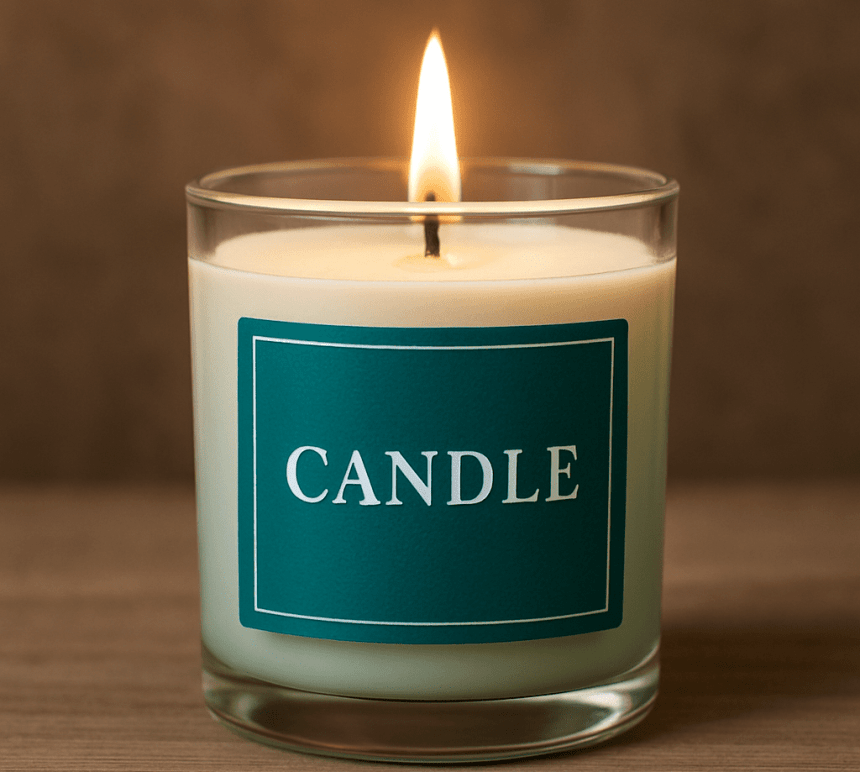
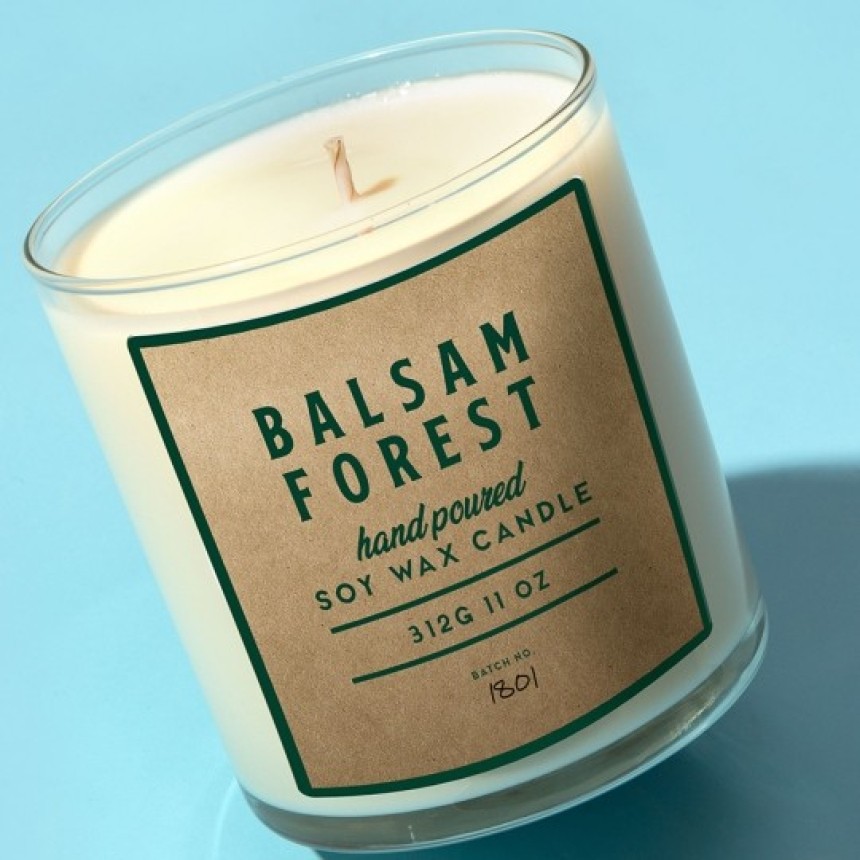
Colors are having an increasingly significant impact on how handmade candles are perceived and how they stick in customers’ minds. In 2026, one of the most interesting colors will be Transformative Teal—a combination of dark blue and green. This color aligns well with the desire for simplicity and tranquility. It works perfectly, for example, on labels for relaxation candles.
Alongside Transformative Teal, muted purples, subtle pinks, and warm beiges will emerge. Colors inspired by nature, as well as contrasting hues—such as deep red or noble gold—allow for the creation of strong visual impressions without being overly dramatic.
2026 Trends in Candle Labeling – The Most Popular Label Design Styles
In 2026, designing a candle label featuring a brand logo will be about more than just choosing a font and colors—it will be a conscious choice of style that reflects the product’s character and captures the customer’s attention. Here are the styles that will emerge in packaging and label design for handmade candles in 2026.
Naive Design
Free-flowing lines, imperfect drawings, and pastel colors give the label a handcrafted feel. This style resonates particularly well with younger audiences.
Blueprint design
A technical, almost engineering-inspired style with numerous graphic markings—it gives the candles an impression of precision and thoughtful design. Popular among brands that have a distinctive and well-defined graphic style.
Trinket design
Small visual elements arranged in thoughtful compositions—buttons, beads, or pieces of seashells—give the label an emotional and personal dimension.
Effective branding for artisanal candles—how to design a candle label that aligns with 2026 trends?
- Define what sets your brand apart from others and how you want to present it to your audience.
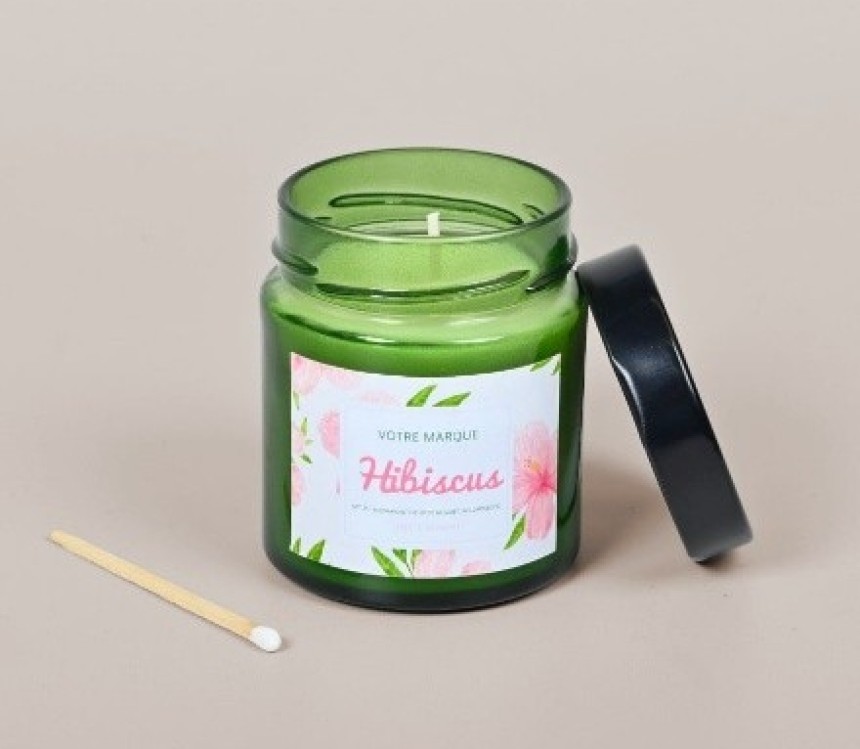
- Choose the right size and shape for your label—options include rectangular, round, and even hexagonal labels.
- Decide what material your label should be made of—you might want to use recycled labels to stay on trend.
- Design the label yourself or have a graphic designer create it for you, including the logo, fragrance name, ingredients, and other required information. Be sure to stay in line with current trends.
Effective Branding for Handcrafted Products 2026 – How to Create a Cohesive Visual Identity for a Candle Brand?
A strong artisan brand is not just about the products, but also about how they are presented.
Define the brand’s foundation
Think about your mission, values, and what you want to convey through your candles. Choose a name that immediately evokes the right associations—it can refer to the scent, raw materials, or craftsmanship.
Design the key visual elements
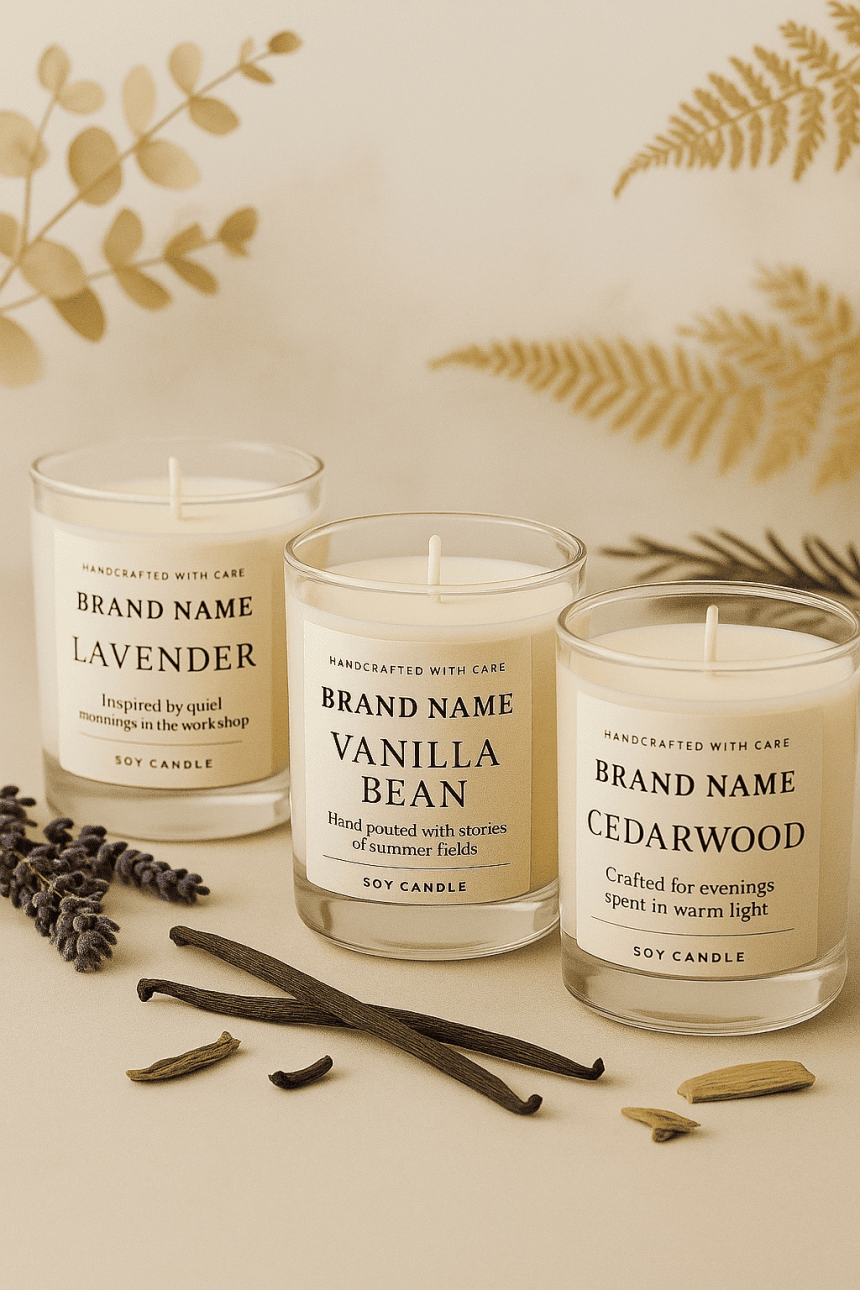
Your logo should be simple and recognizable. Choose a color palette and typography that align with your brand’s character—so they can be easily applied across various promotional materials.
Implement your visual identity across all materials
Design labels, packaging, flyers, and social media graphics while maintaining a consistent style. Ensure that information is clear and that every customer interaction is aesthetically pleasing—regardless of the communication channel.
Maintain consistency
Ensure that all visual elements—from labels to promotional materials—form a cohesive whole. Prepare a set of guidelines that clearly define how to use the logo, colors, fonts, and additional motifs. This is especially important if several people or external companies are working on your communications.
Modern Candle Design Trends for 2026 – Check Out the Wide Variety of Candle Labels Available from Avery
At Avery, we offer a variety of candle labels and stickers—from rectangular and round to oval and square, as well as special shapes like hearts and flowers. All are available in various sizes—you can easily customize them to suit your needs. We also offer a wide selection of materials, including matte, glossy, and eco-friendly options.
FAQ:
How does candle branding influence customers' purchasing decisions?
Consistent and well-thought-out candle branding is crucial to how the product is perceived. Customers are more likely to choose candles that look professional and catch their eye. The label is the first point of contact with the brand—a well-designed label can inspire trust, highlight quality, and make the product stand out on the shelf.
What Kind of Candle Stickers for 2026—Ready-Made Designs or Custom Labels?
In 2026, more and more brands are focusing on personalization. Ready-made designs are readily available, but it is the personalization of candle labels that allows brands to better convey the character of their product and strengthen their brand image. This makes it easier to build brand recognition and stand out from other candles on the market.
What will be the best candle label in 2026? What should you keep in mind when designing labels?
It is recommended to pay attention to the choice of material, the clarity of the information, and ensuring that the color scheme and style align with the overall brand identity. When designing unique self-adhesive labels, it is also a good idea to consider environmental factors.