The PPWR is a game-changer. How can you prepare your labels and packaging for the new regulations?
Until recently, a label was mainly a “nice extra” for a product.
Today—and even more so in the coming years—it is becoming one of the key elements of the entire package.
The reason? The Packaging and Packaging Waste Regulation—a new EU regulation that’s changing the approach to packaging design across Europe.
And while this may sound like a topic “for big companies,” in practice it affects everyone—from small handmade brands to larger-scale manufacturers who sell anything to the EU.
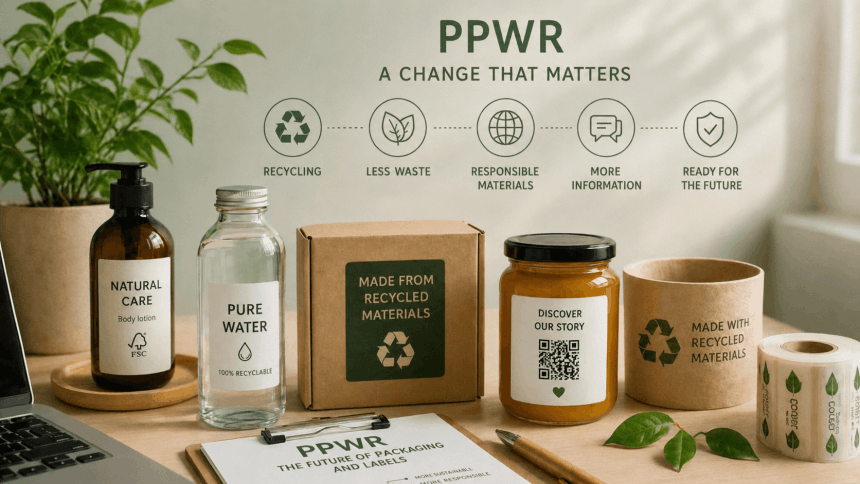
What exactly is the PPWR all about?
Simply put, packaging (and everything that goes into it) is supposed to be easier to recycle and more thoughtfully designed.
This means one thing: it’s no longer enough for a label to just look good.
Now it must also:
• work in harmony with the packaging
• not hinder recycling
• be designed “with care”
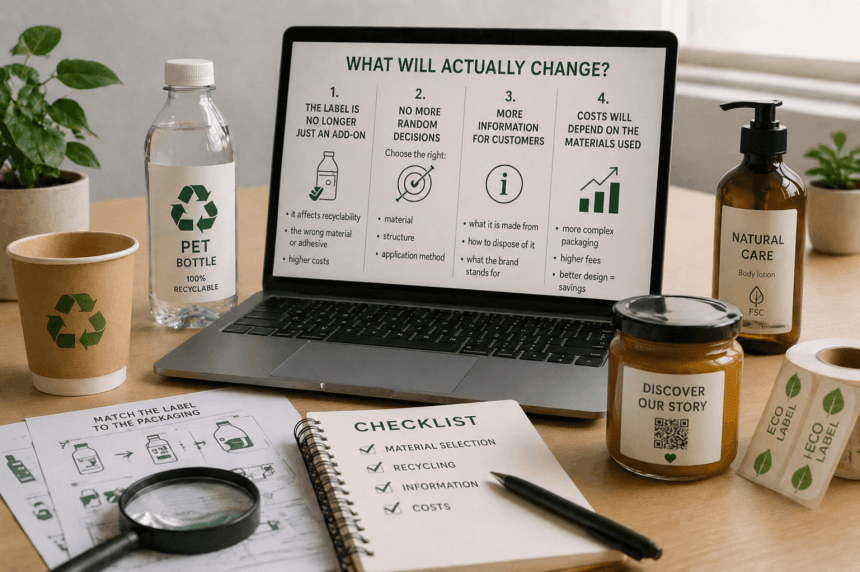
What will actually change?
1. The label is no longer just an accessory
More and more often, it is the label that determines whether packaging can be recycled.
The wrong material or adhesive can:
• make recycling more difficult
• increase costs for the manufacturer
2. Fewer random decisions
Until now, many choices were made “on a whim”: because something was pretty, trendy, or cheap. Now, what matters is the right fit:
• the material for the packaging
• the structure
• the method of application
3. More information for the customer
Packaging is taking on a new function: providing information. Customers want to know:
• what the product is made of
• how to dispose of it
• what the brand stands for
And this is where the label takes on a completely new role.
4. Costs will depend on materials
With the PPWR, the importance of so-called extended producer responsibility (EPR) is growing. In practice:
• the more complex the packaging, the higher the fees
• the better it’s designed, the greater the savings
How to Prepare? 5 Practical Solutions
Instead of making last-minute changes, it’s worth adopting solutions now that comply with the new regulations and help you better prepare for the upcoming changes.
1. FSC-certified paper labels
This is one of the simplest steps toward more responsible packaging.
Why is it worth it?
• They align well with PPWR requirements
• They’re easy to recycle
• They fit the “eco” aesthetic without going overboard
Result: The product looks natural and is more “intuitive” for the customer
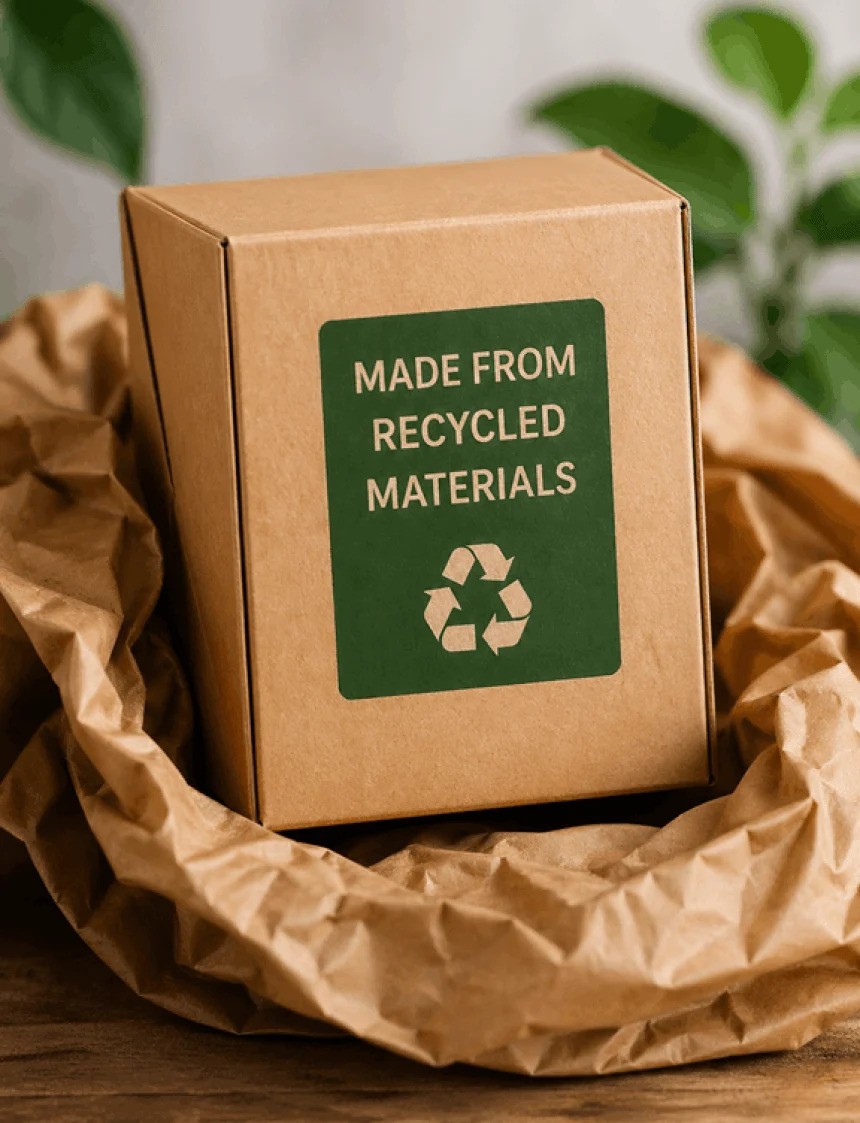
2. Recycled materials
More and more brands are turning to recycled materials, and it shows. This isn’t just a trend—it’s a direction mandated by regulations!
Benefits:
• lower environmental impact
• better brand perception
• concrete actions that can be communicated (rather than just “eco” slogans)
3. Film labels tailored to the packaging
It’s not about giving up film altogether. It’s about ensuring it’s compatible with the packaging. Example: a PET bottle → a label that doesn’t interfere with PET recycling. The result?
• better processing
• a modern look
• fewer problems down the road
Remember: there are many recycled film labels available on the market. Take advantage of this solution!
4. Designing the Label with the Big Picture in Mind
Today, it’s not just “what” that matters, but also “how.” The following factors are important:
• label size
• coverage of the packaging
• finishes used
Sometimes less is more—even when it comes to recycling.
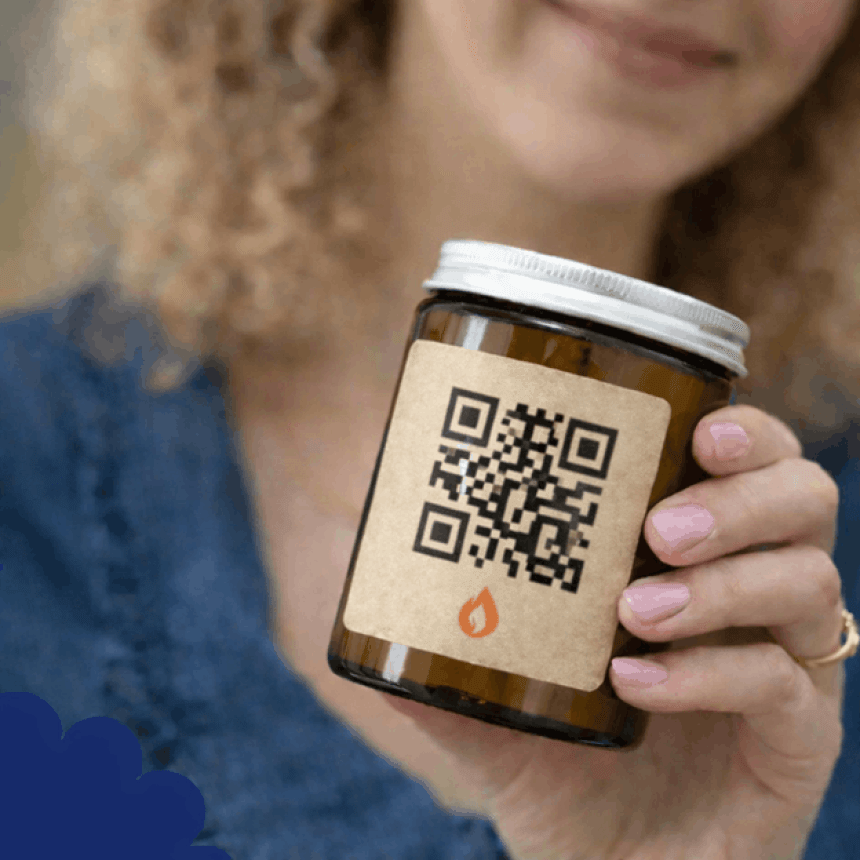
5. QR Codes and More Space for Your Story
You can’t fit everything on a label. But you can present it differently. Today, a QR code isn’t just a gimmick—it’s a tool:
• to convey more information
• to build relationships with customers
• to prepare for future requirements (e.g., DPP)
PPWR isn’t a problem. It’s a moment of decision.
There are two ways to approach this:
1. Wait and react to changes
2. Act proactively and use them to your advantage
Brands that are already:
• simplifying their packaging
• choosing better materials
• communicating specifics
… will be one step ahead of the competition.
PPWR is changing the way we think about packaging.
The label:
• is no longer just an accessory
• affects recycling
• becomes a vehicle for information and brand value
And while the changes are significant, one thing remains the same: A well-designed label still sells—only now it does so more intelligently.
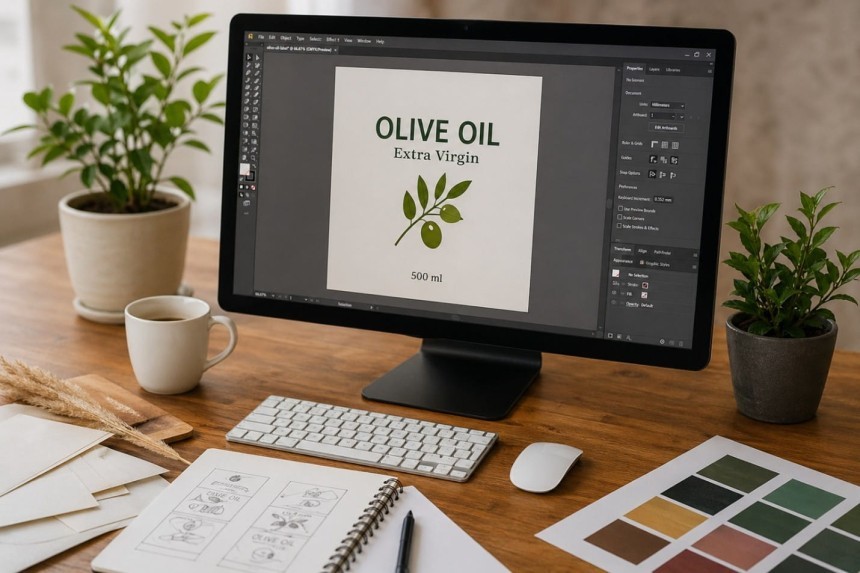
Want to get your labels ready for what’s ahead?
Check out Avery’s solutions and see how easy it is to:
• choose the right materials
• design labels online
• order them in just a few simple steps
Design and order labels tailored to your new requirements
Do you have questions about your product?
If you’re unsure about:
• which material to choose
• whether your label complies with the PPWR
• how to communicate this to your customers
Contact us—we’ll help you choose labels that not only look great but are also “future-proof.”
FAQ:
No.
The PPWR applies to all companies that place packaged products on the market—regardless of their size.
If you sell products (e.g., candles, cosmetics, honey, handmade items) to European countries, these regulations apply to you as well.
Yes, and more than you might think.
A label can:
• make recycling easier (if it’s chosen well)
• or make it harder (e.g., due to inappropriate adhesive or material)
That’s why it’s now considered part of the overall packaging, not just an accessory.
Most commonly:
• paper labels (e.g., FSC-certified)
• recycled materials
• films compatible with the packaging material (e.g., PE with PE)
It is crucial that the label is compatible with the packaging, not just the material itself.
There’s no requirement to “change everything immediately,” but 2026 is when the requirements will actually be enforced.
The sooner you start, the:
• lower the costs of the changes
• less stress
• greater your competitive advantage
Just 3 steps to get started:
1. Check what your packaging is made of
2. Make sure the label is compatible with it
3. Choose materials that are easy to recycle